
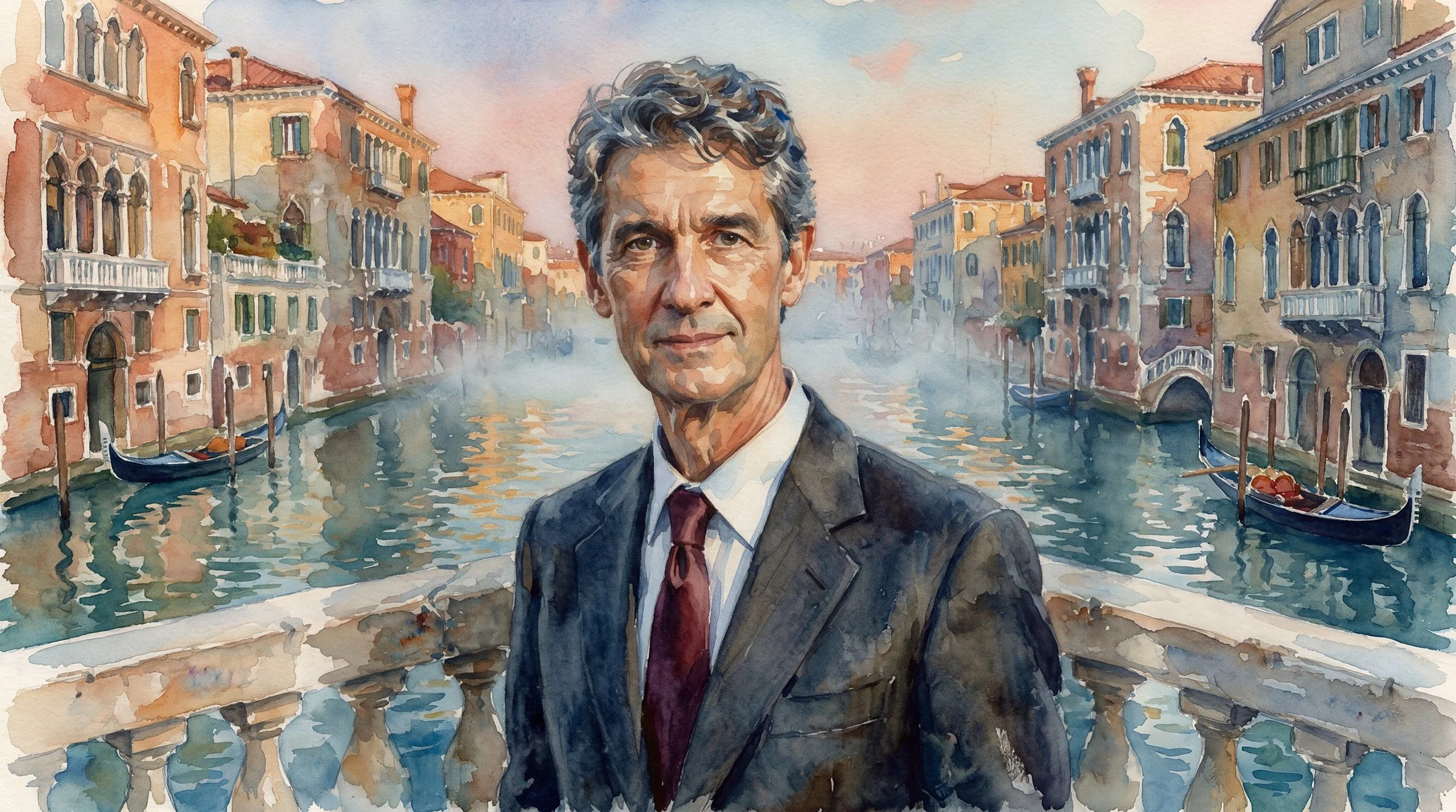
The AI Brush and its Value in Photographic Storytelling.
Photography has always occupied a fascinating space between truth and imagination.
It freezes time, preserves memory, documents history, and allows human beings to revisit moments otherwise lost to the erosion of time. Today, artificial intelligence enters this continuum not as the destruction of photography, but as its newest augmentation.
As with every major technological advancement, reactions are divided. Some embrace the possibilities. Others recoil, feeling that something sacred has been diminished — the craft, the struggle, the artistry, the authenticity of the human hand.
Yet history repeatedly reminds us that innovation rarely erases art. More often, it expands the ways art may be expressed.
When Johannes Gutenberg introduced the movable-type printing press in the 15th century, some surely feared that the artistry of hand-copied manuscripts would vanish forever. In one sense, they were correct; the world would never be the same. But the deeper truth is that artistic expression did not die. Calligraphy survived. Illuminated manuscripts remain treasured works of beauty. Painting endured. The human desire to create meaning through visual form remained untouched.
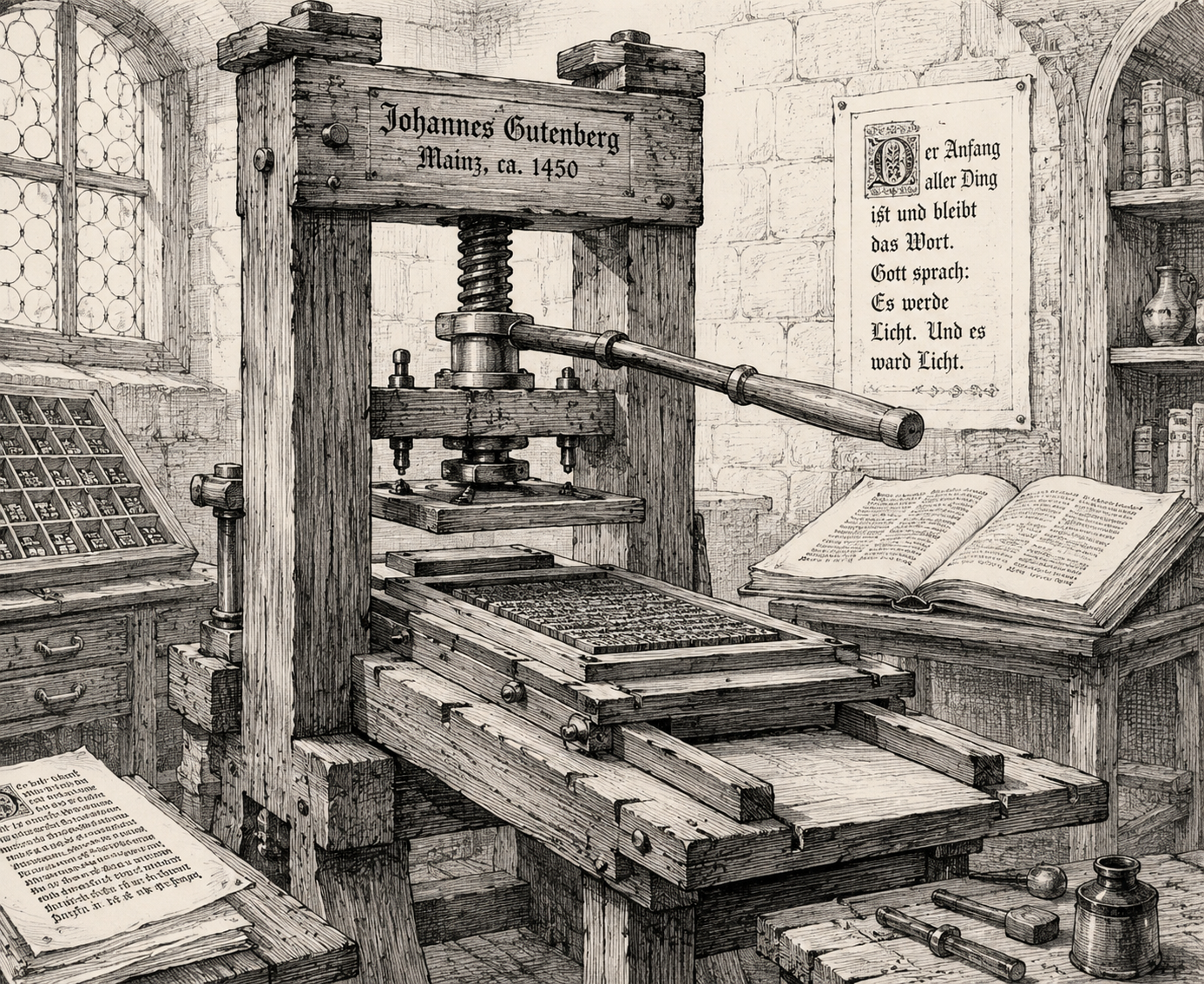
The Gutenberg Press 1450 AD
The press did not destroy storytelling…
It unleashed it.
Photography itself was once viewed with suspicion. Painters questioned whether mechanical image-making could possess artistic merit. Later, digital photography was criticized by film purists. Photoshop was accused of corrupting photographic truth. Each technological wave was initially treated as an existential threat to artistic authenticity.
Yet photography endured… Because the camera was never the true source of the art. The human being behind the image always was.
The same pattern has unfolded repeatedly throughout creative history. The rise of streaming music did not eliminate the mystique of vinyl records. Digital audio did not erase the reverence for vacuum tube amplifiers glowing softly in dim listening rooms. In many ways, these older technologies became even more cherished — not merely for their utility, but for their warmth, texture, ritual, and emotional presence.

The Famous McIntosh Amplifier and Turntable, still sought out today.
Film photography occupies a similar space…
An avid photographer since age 13, this photo of me from 1956, using the school darkroom with a Leitz auto focusing enlarger and vacuum tube photo timer, to project a recently photographed scene.
Many photographers, including myself, continue to treasure film not simply because of its visual qualities, but because of the process itself: the anticipation, the grain, the chemistry, the limited exposures, and the quiet mystery of watching an image emerge in the developer tray.
However, with the advent of AI to recreate images from the past, I for one am quite facinated with the opportunity to revisit earlier photographs, my own and those of my Uncle’s.
Much like the voice and camera of Walter Cronkite, in the 1950s TV Series, You are there…
The TV program was You Are There, a CBS historical reenactment series.
It was hosted by Walter Cronkite and presented major historical events as if modern television reporters were covering them live. The famous opening idea was essentially:
“You are there…”
Reporters would “interview” historical figures during events such as the signing of the Declaration of Independence, the death of Socrates, the fall of Troy, or the assassination of Julius Caesar.
It began as a radio program in the late 1940s called CBS Is There, then became the TV series You Are There in the 1950s. The format was distinctive because it blended history, documentary style, journalism, and dramatization—as though CBS News had somehow sent reporters back in time.
The technology of AI advances, yet the artistic experience still remains, valued.
AI now extends that same creative continuum in extraordinary ways. It allows photographs to become more than static records. They may now become portals into memory, imagination, restoration, and emotional storytelling.
A child once loved a small yellow parakeet.
Years later, only a photograph of the child remains, with her memory revived — a young girl holding her treasured companion in a garden emerges. Through AI, the memory can be revisited and gently reimagined. The softness of the light restored. The bird brought back into vivid focus. The emotional truth of the memory renewed. The technology becomes less about fabrication and more about remembrance.
The Recreation of a Memory Lost … Retold with AI
From the Original Kodachrome slide of my Daughter Cindy…
A Woman Imagines Her 40th Birthday Celebration…
Not simply as a snapshot, but as a cinematic vision — elegant, dramatic, alive with mood and atmosphere. A single studio portrait and a creative concept become the starting point for visual storytelling. AI assists in translating imagination into image, much like a painter once transformed imagination into oil upon canvas.
AI Does Not Replace the Photographic Process
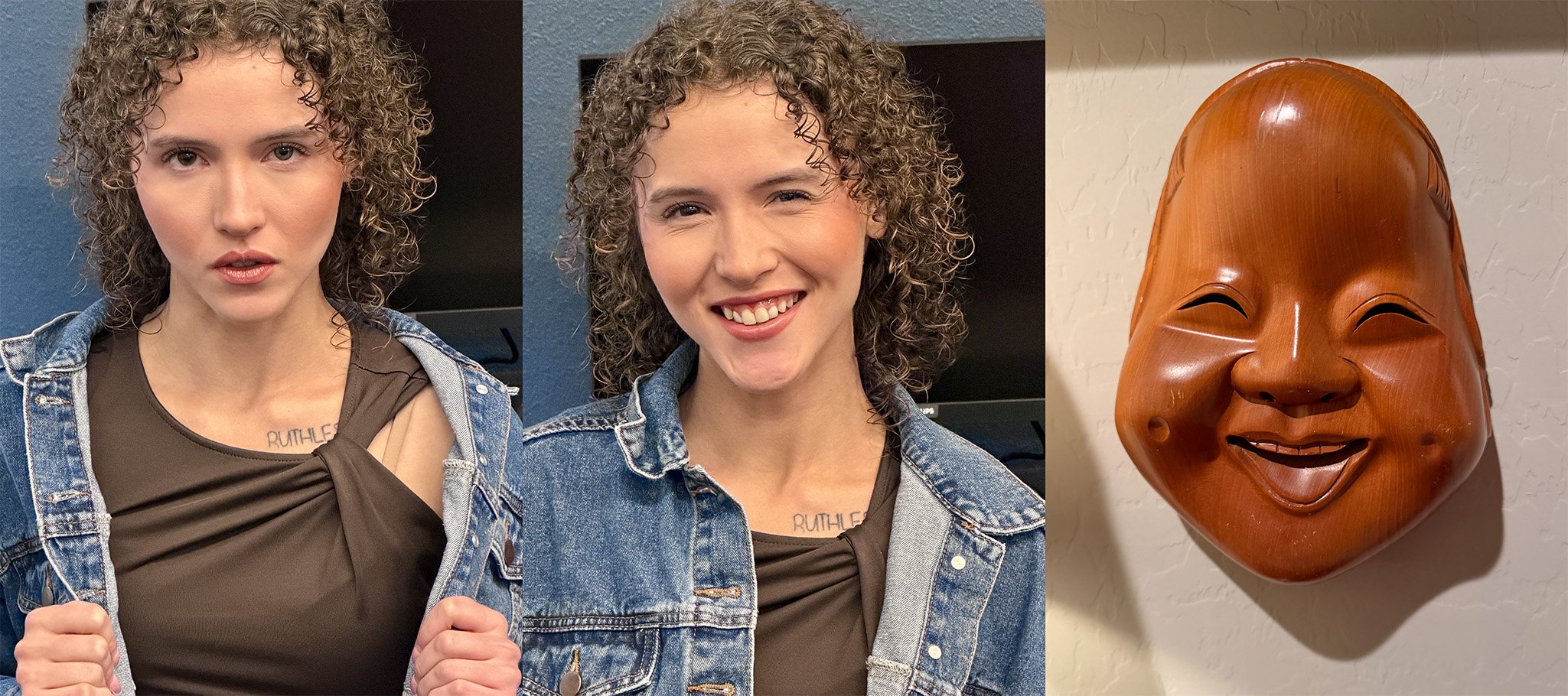
In this example, my model, Oaklie Duncan, provided the subject material for the photo session and Lighting Workshop. It required setting the lights, a medium gray backdrop, costume and fan. The stage was set to create a classic scene. Instead of looking for a backdrop to create the realism, an AI prompt created a realistic 3D scene.
This image represents the original photograph of my model from my Studio Workshop.
From the original photograph created in my studio, I was able to craft a realistic setting of a Japanese home with moonlight streaming through the rice paper door, add a crimson scarf held, Samurai sword, jade dragon, lanterns and footwear. As well as lightly style Oaklie’s hair.
Photo Restoration - A window into the Past
A very powerful feature of AI is the ability to restore the photographic image. I have no idea where the original photograph of my Grandfather is. Perhaps lost… However, amongst family records, I found a Xerox copy of my Grandfather, John Burgoin Ely. Maybe. based on the dot pattern, this may have even been a copy of a news article. AI miraculously regenerated the image to the right, providing me with a view of my Grandfather as a young man, perhaps in his early forties. I find this ability to be remarkable and to me, invaluable.
The original image, perhaps of a newspaper clipping of my Grandfather.
The restoration, unimaginably accurate, a glimpse for the first time of the young man.
My Sister’s Grandmother Reimagined
From the original vintage photograph preserved as an heirloom…
Reimagined as if photographed today with a modern digital camera…
Historical photography may benefit even more profoundly.
Old photographs damaged by time, war, improper storage, or primitive reproduction methods can now be digitally restored with astonishing sensitivity. Faces once obscured emerge again. Historical events become more immediate and emotionally accessible. The visual record of humanity regains clarity.
In some cases, AI may even help recreate moments that were never photographed at all — not as deception, but as interpretive visual storytelling. Much like historical paintings once reconstructed battles, coronations, discoveries, and ceremonies from eyewitness accounts, AI allows contemporary artists and historians to visualize memory and narrative in new forms.
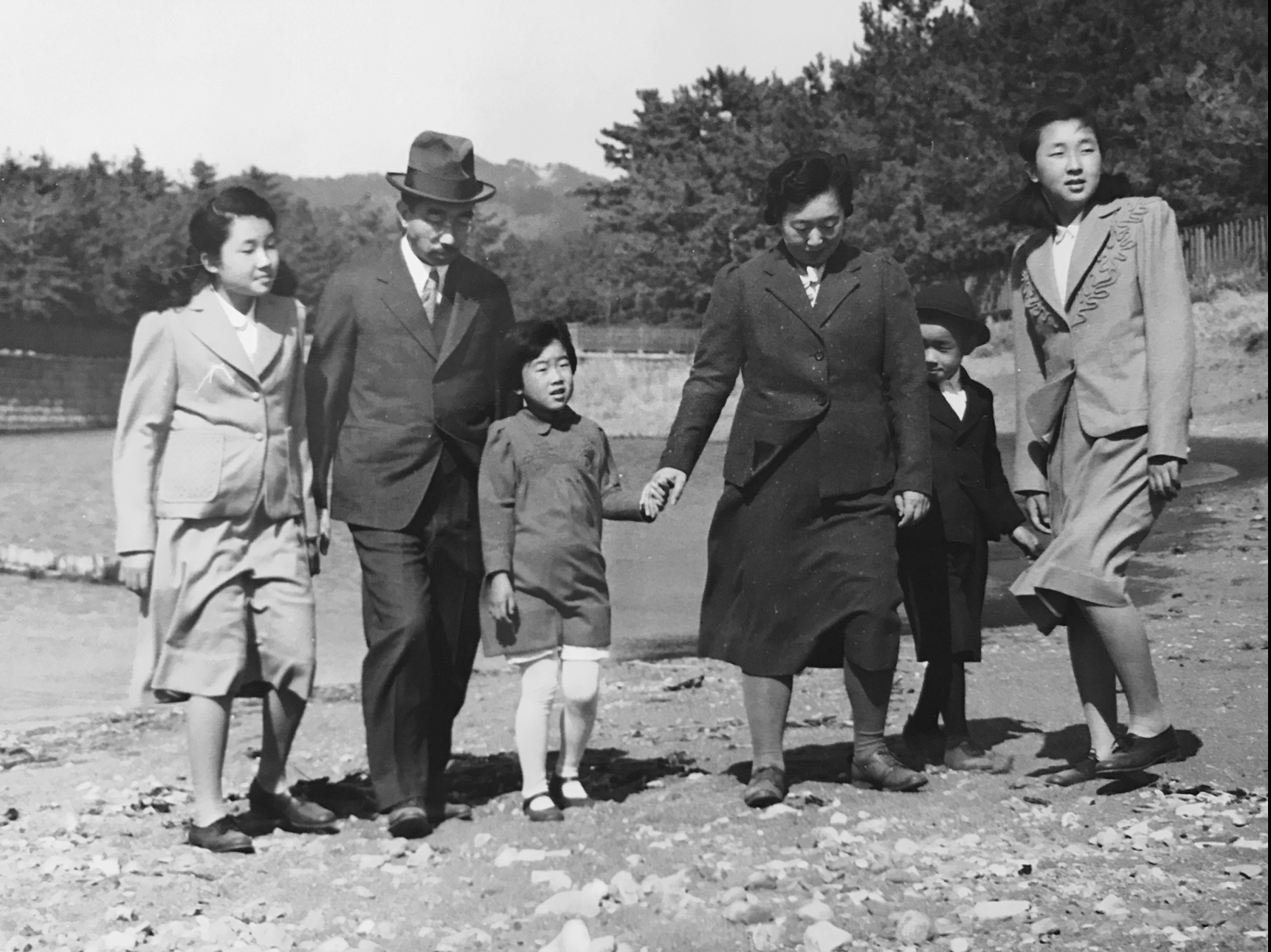
Perhaps, this photograph of the Emperor of Japan with his family may be a good example to restore. My Uncle, Julian B. Ely, former Chief Editor and Staff Photographer for the Pacific Stars and Stripes, recorded several such photographs of the Emperor during the US Occupational years…
Adding an Element of Dignity to a Surrendering Nation
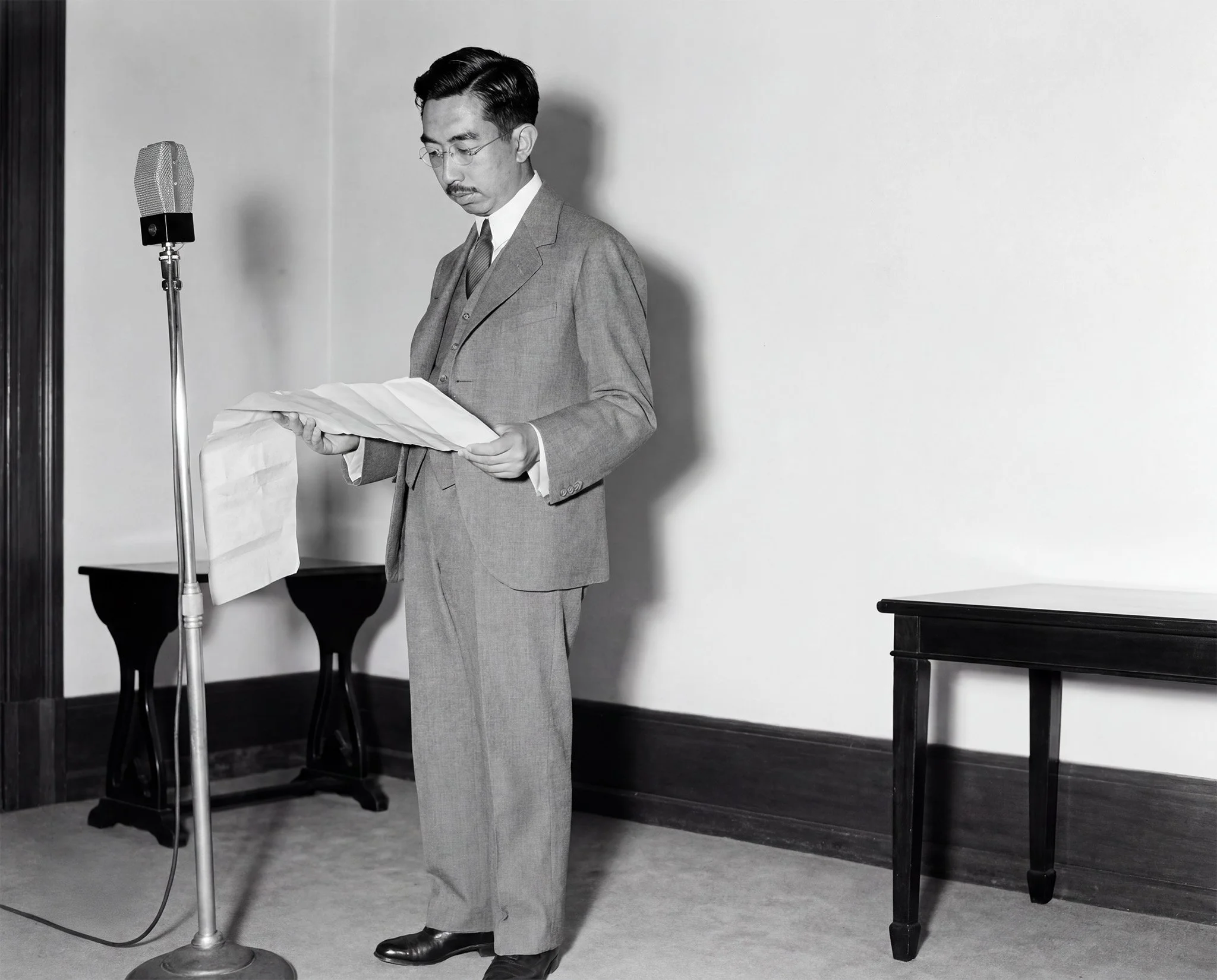
Above: The Original Photograph, lightly restored…
The Significance of this Photograph, A Moment in History
The timeframe is the night of August 14, 1945, inside the Imperial Palace complex in Tokyo, when Emperor Hirohito recorded the surrender rescript for radio broadcast. The recording was then aired to the Japanese people at noon on August 15, 1945, Japan Standard Time. This broadcast is known as the Gyokuon-hōsō, often translated as the “Jewel Voice Broadcast.”
The image shows Hirohito reading the Imperial Rescript on the Termination of the War into an NHK microphone. According to commonly cited historical accounts, NHK technicians set up recording equipment in a secure room or bunker beneath the Imperial Household Ministry. Hirohito recorded the speech shortly before midnight, around 11:25–11:30 p.m. on August 14. The broadcast itself was not live; it was played from a phonograph recording the next day.
The background is dramatic. Japan had just endured the atomic bombings of Hiroshima on August 6 and Nagasaki on August 9, and the Soviet Union had entered the war against Japan on August 8–9. Japan’s leadership was divided over surrender, and Hirohito intervened to accept the Potsdam Declaration. The speech did not use the plain word “surrender” in the way modern listeners might expect; it was phrased in formal, archaic court Japanese, which many ordinary citizens found difficult to understand. Still, the meaning was unmistakable: the war was ending.
There was also an attempted military coup, known as the Kyūjō Incident, during the night of August 14–15. Rebel officers tried to seize the Imperial Palace and destroy the recordings before they could be broadcast, hoping to continue the war. They failed to locate the records, which were hidden and eventually delivered safely to NHK.
For many Japanese citizens, this was the first time they had ever heard the voice of the Emperor. At noon on August 15, after the national anthem, the recording was broadcast nationwide. In the United States and Allied countries, that date became associated with V-J Day, though the formal surrender ceremony took place later, on September 2, 1945, aboard the USS Missouri in Tokyo Bay.
So the image is not of the formal surrender ceremony itself. It is best understood as Hirohito recording the surrender broadcast late on August 14, 1945, which was then heard by Japan at noon the following day.
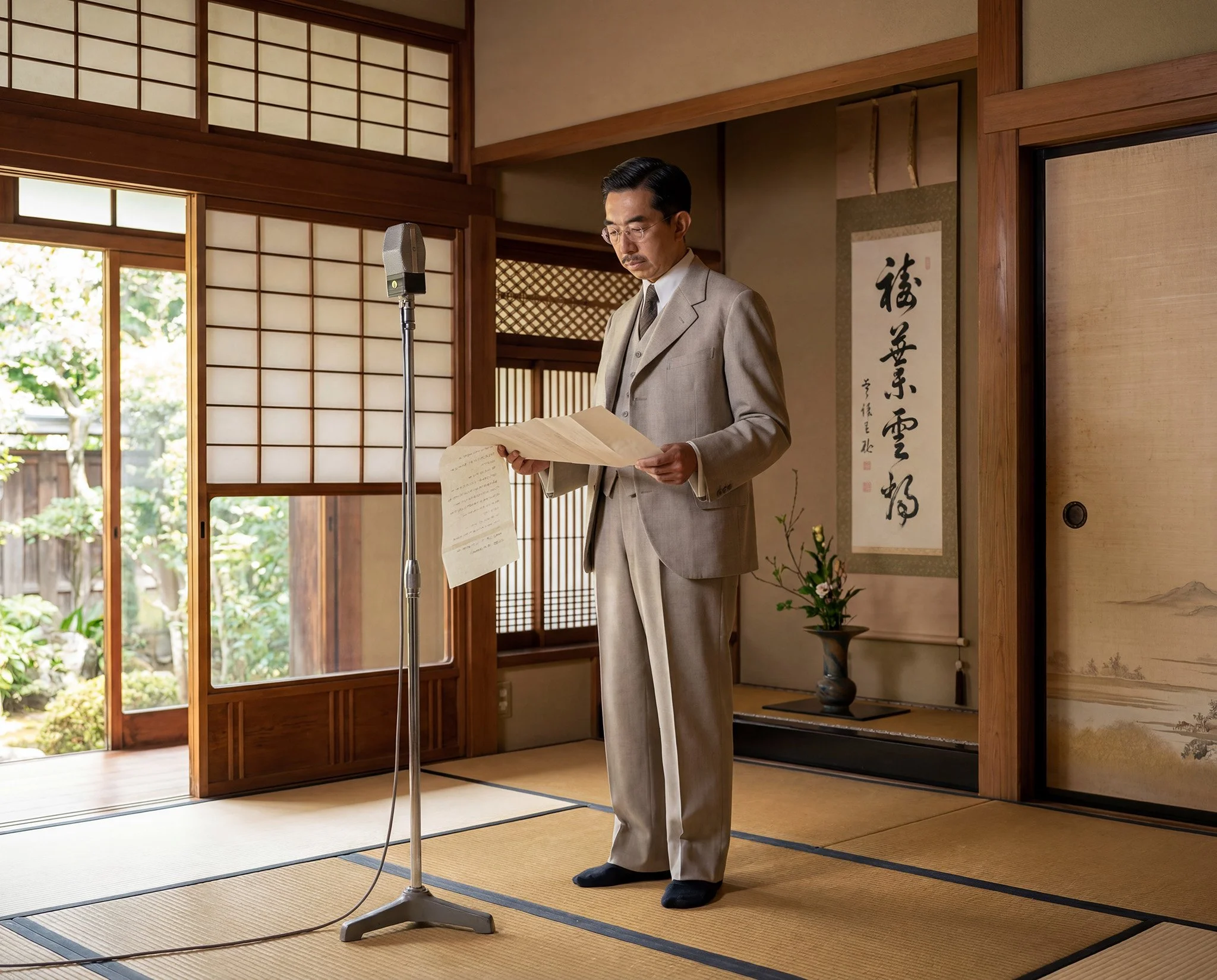
Above: A Scene Reimagined: Adding to this moment in history, an element of respect and dignity to the surrender of a sovereign nation. Soon to become a retold story through original photographs restored…
So the role itself is not new…
Photography has always been about preserving stories. AI simply broadens the vocabulary and artist’s brush through which those stories may be retold.
Critics often ask…
Whether something is lost when an image is generated or augmented through AI rather than entirely handcrafted? But perhaps the more meaningful question is this:
Does the resulting image still move us?
Does it preserve memory?
Does it inspire wonder?
Does it communicate beauty, emotion, history, or imagination?
If so, perhaps the essence of art remains intact.
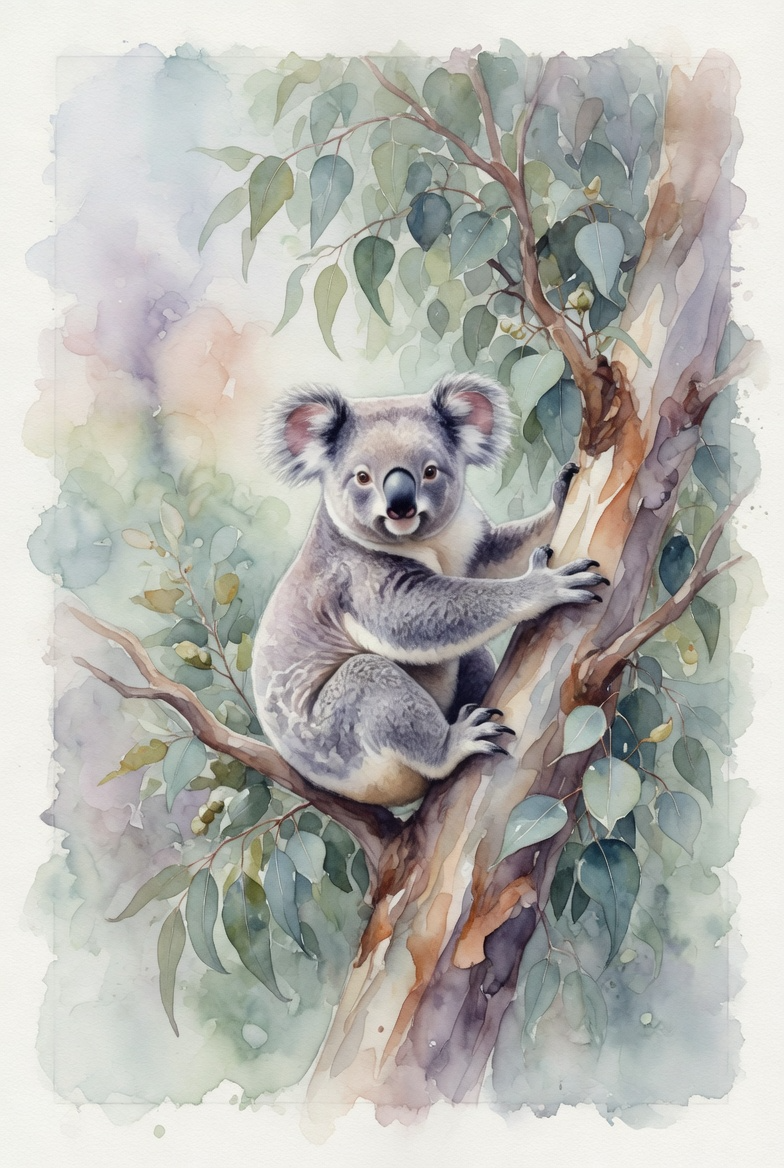
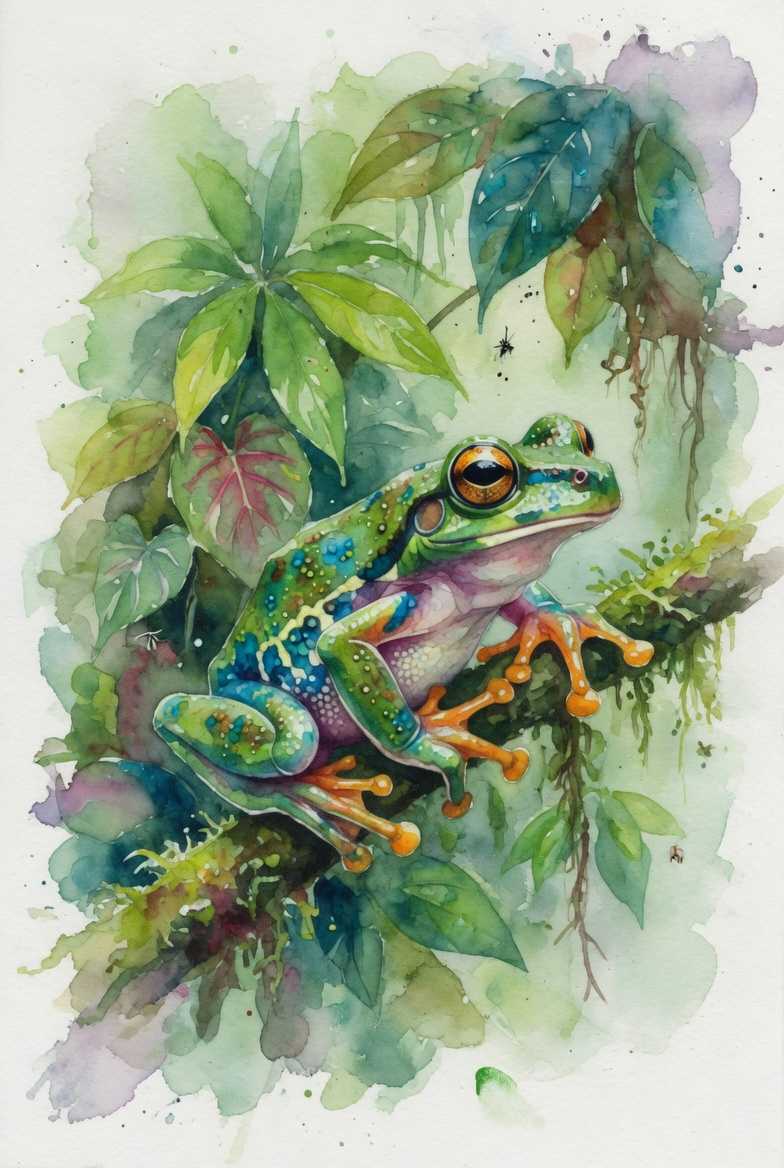
Consider a watercolor rendering of a Koala bear in a eucalyptus tree, or a rainforest frog. If the image began as a photograph, later interpreted through AI into watercolor form, is it inherently less decorative or emotionally resonant than if painted entirely by hand? To some, perhaps yes. To others, the emotional experience of the final image matters more than the specific pathway by which it was created.
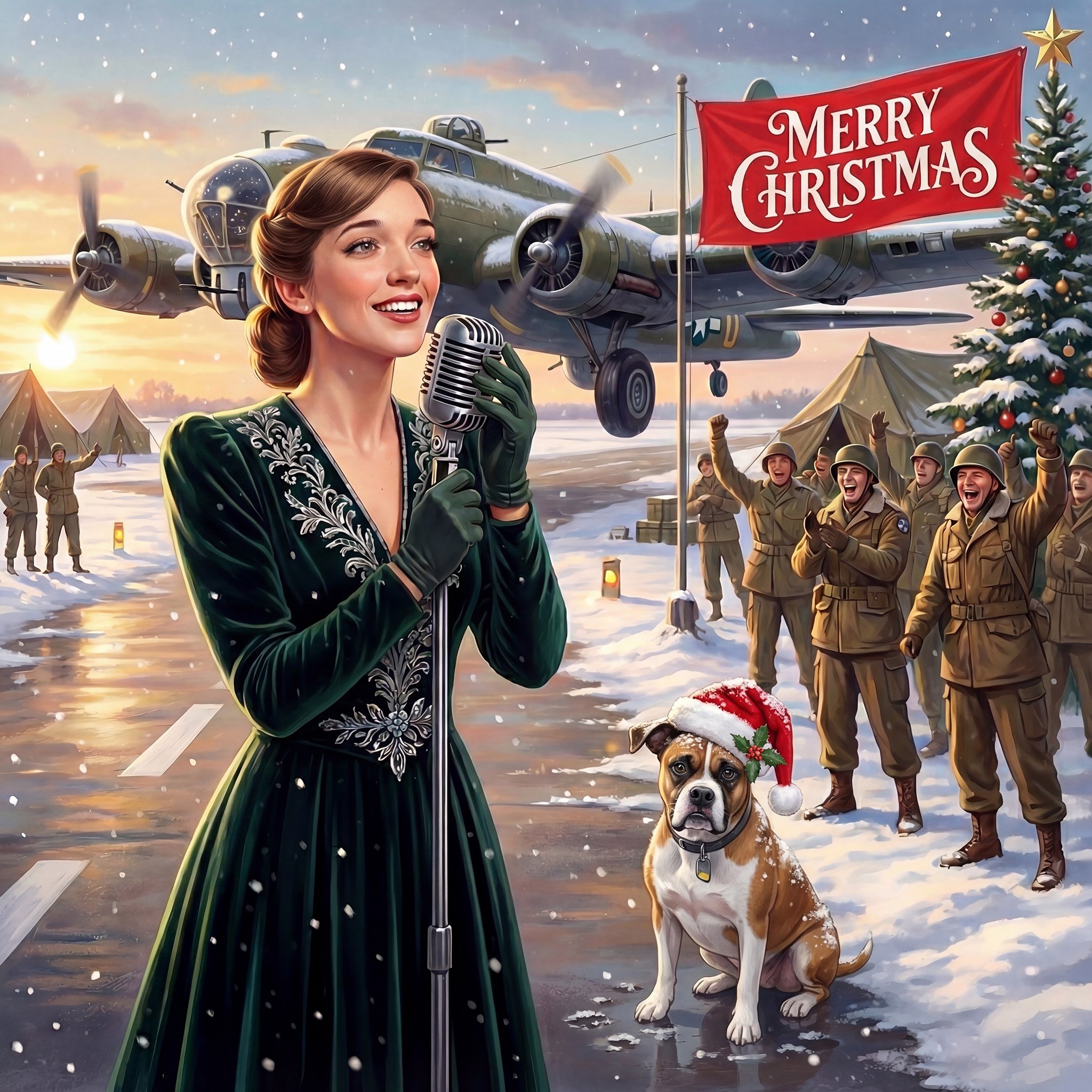
A Family Christmas Card
Featuring it’s newest member, my Granddaughter Brixie
A Celebration of Christmas Past 1943
Art has always evolved through tools.
The pen was once technology
The printing press was once technology
The paintbrush was once technology.
The camera was once technology.
Digital editing was once technology.
AI is simply the newest instrument placed into the hands of storytellers.
The danger lies not in the tool itself, but in how carelessly or dishonestly it may be used. Photography has always wrestled with manipulation, staging, selective framing, and interpretation. AI merely magnifies ethical responsibilities already present within visual media.
Yet alongside those concerns lies extraordinary promise.
AI may help families reconnect with lost memories.
It may help historians revive fragile archives.
It may help artists visualize dreams previously impossible to create.
It may help ordinary people tell stories with new emotional depth.
The Visual Complexity of AI
Helping me further explore the visual complexity of AI, I decided to make an experiment, taking a couple of simple images from my iPhone and exploring what might occur with AI and creative text prompts. I then decided to create a completely different theme, “The Couture Experience.”
Givenchy - Irving Penn Text Prompt Rich Experiment The Couture Experience
“As I reflect upon more than seventy years of involvement with photography, engineering, and education, I am fascinated by how effortlessly the mind can travel the arc of time.”
In a matter of moments, I can recall a teenage workbench crowded with vacuum tubes, resistors, and soldering irons to a modern computer generating images through artificial intelligence. The technologies span decades; yet memory traverses them in an instant.
One moment I am sixteen years old, assembling an AM radio transmitter to entertain the neighborhood kids, and simply to discover whether I could make it work. The next, I find myself in the glow of a photographic darkroom, hand-dodging photographic paper beneath a safelight. Hand spotting and colorizing the prints with Marshal oils. Then onward to engineering laboratories, product development teams, aerospace programs, college classrooms, photography workshops, and eventually to a computer screen exploring the possibilities of generative AI.
Looking back, what appears at first to be a collection of interrelated experiences reveals itself as a single thread woven throughout my life:
Drawing on Inspiration from the Past, Givenchy, Irving Penn, photography from the 40s and 50s …
It appears that AI understand the faces, wardrobe and appearance of celebrities. Allowing me to explore photographic eras, composition, posing and lighting… A great fascination to me.
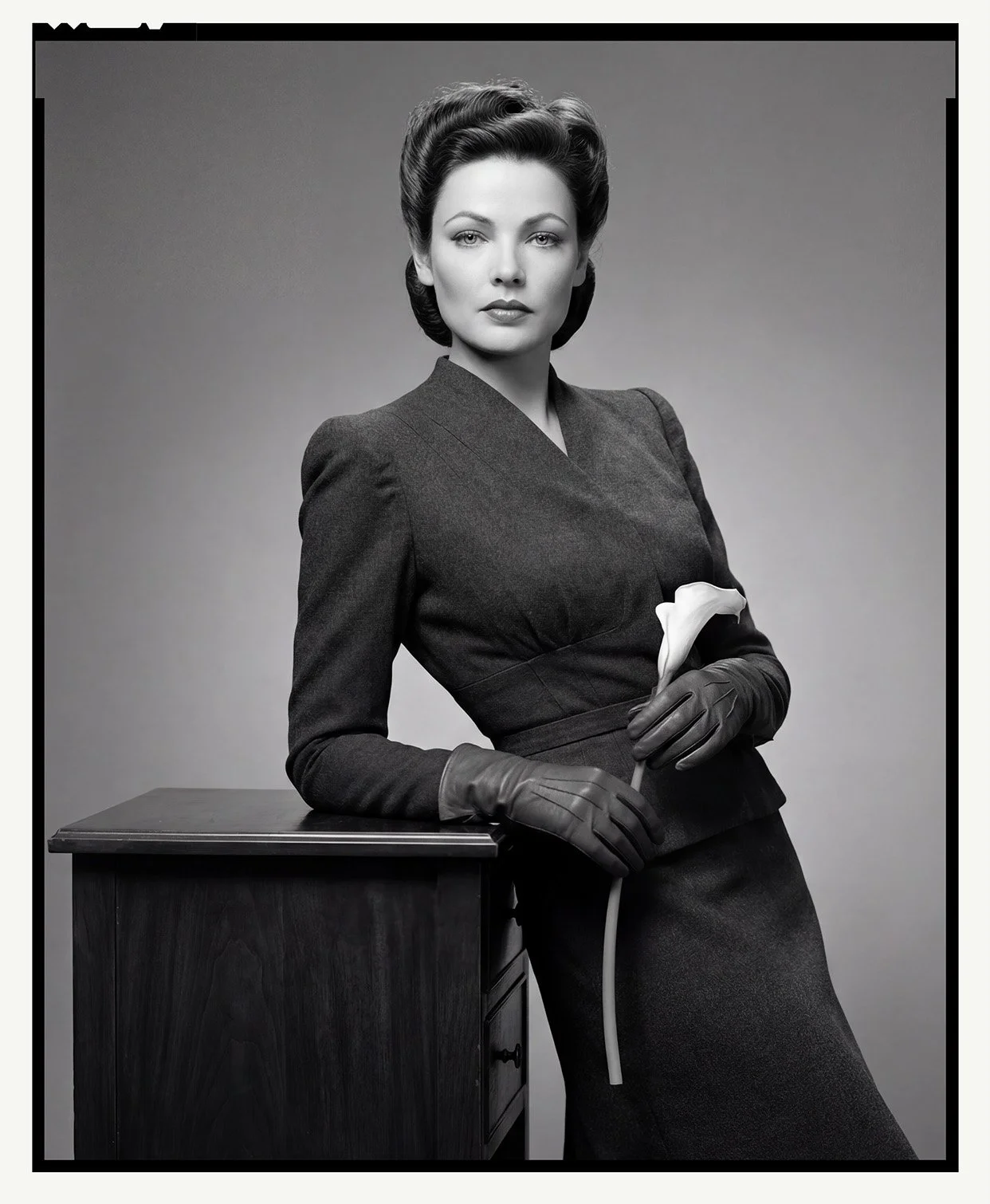
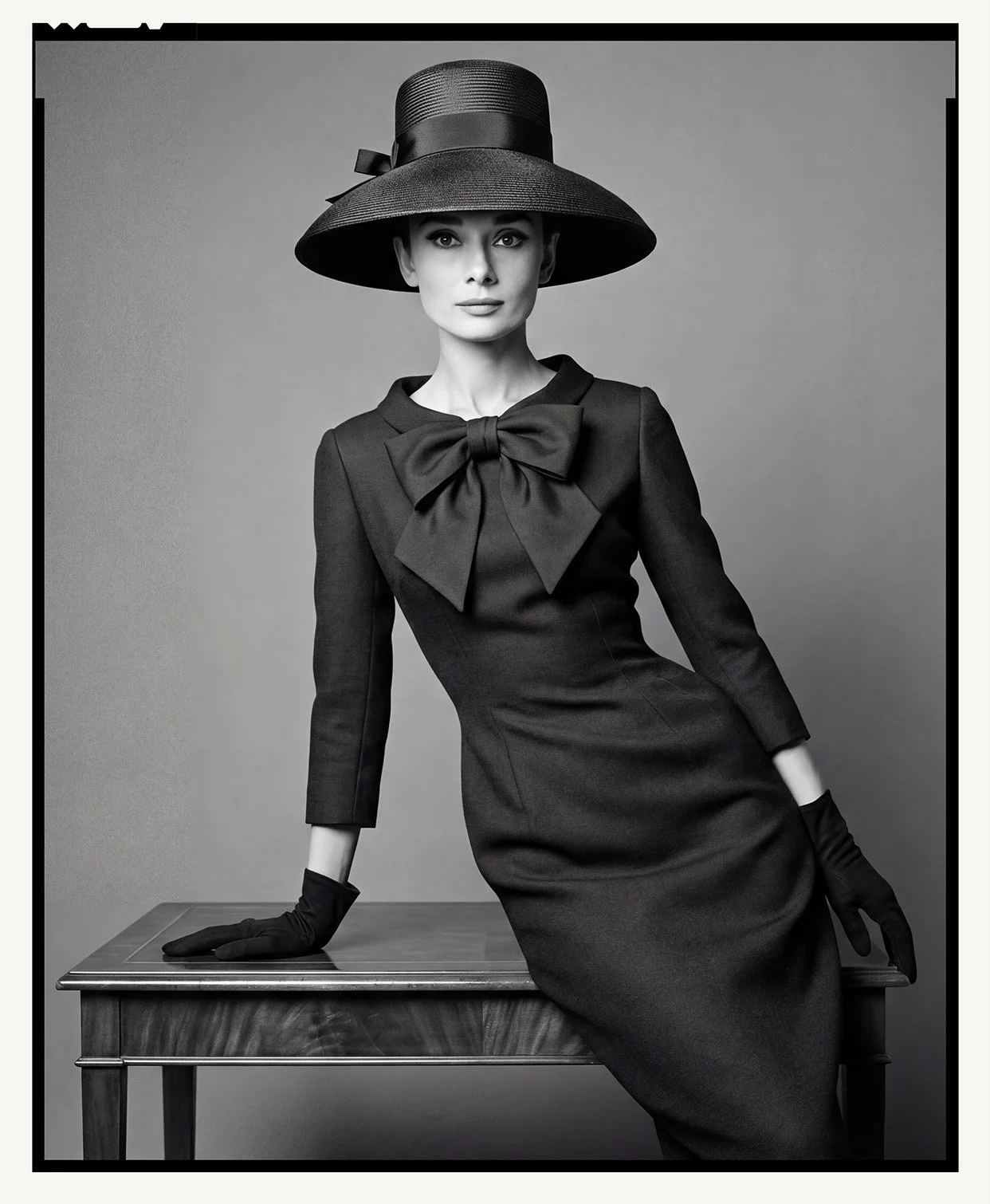
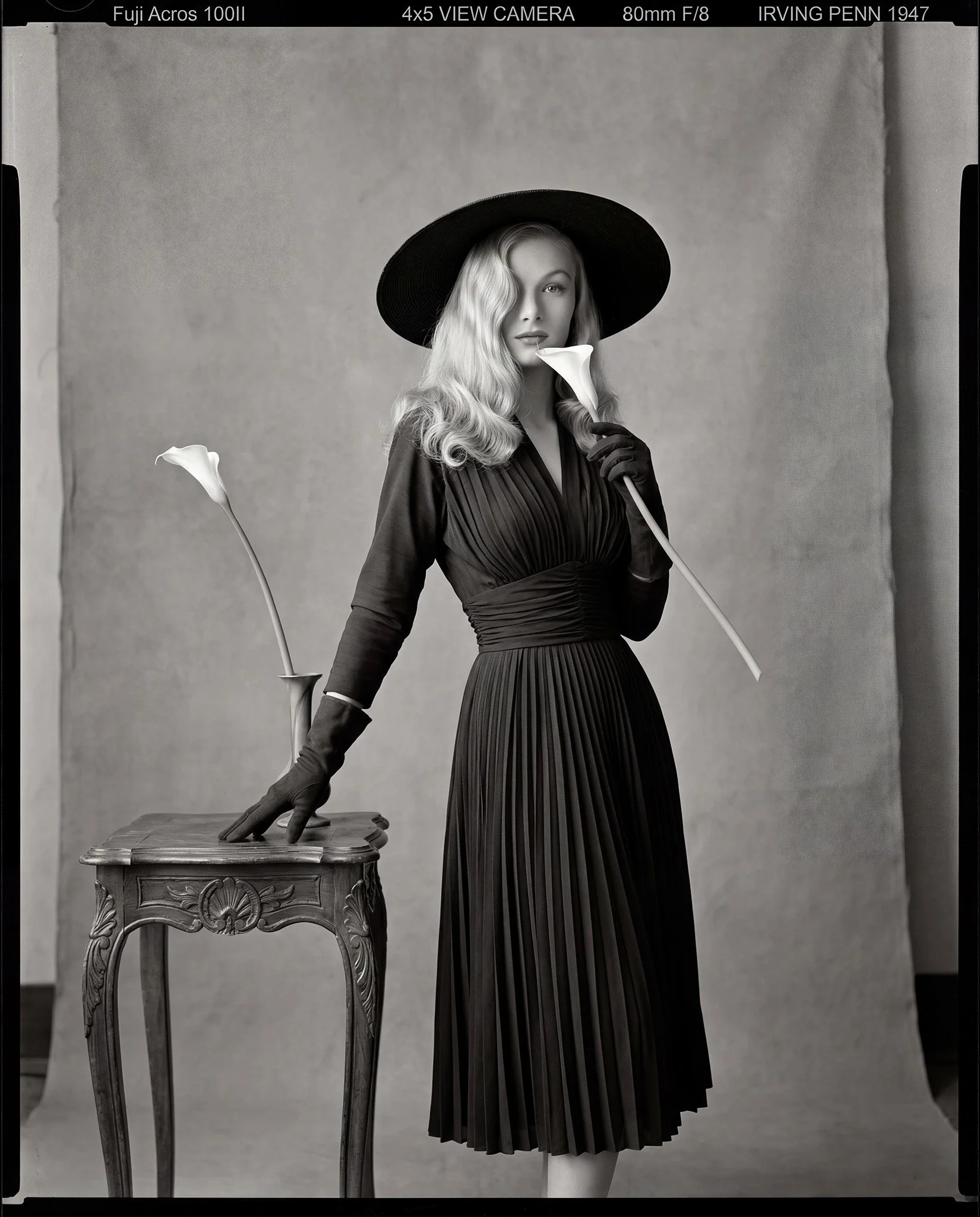
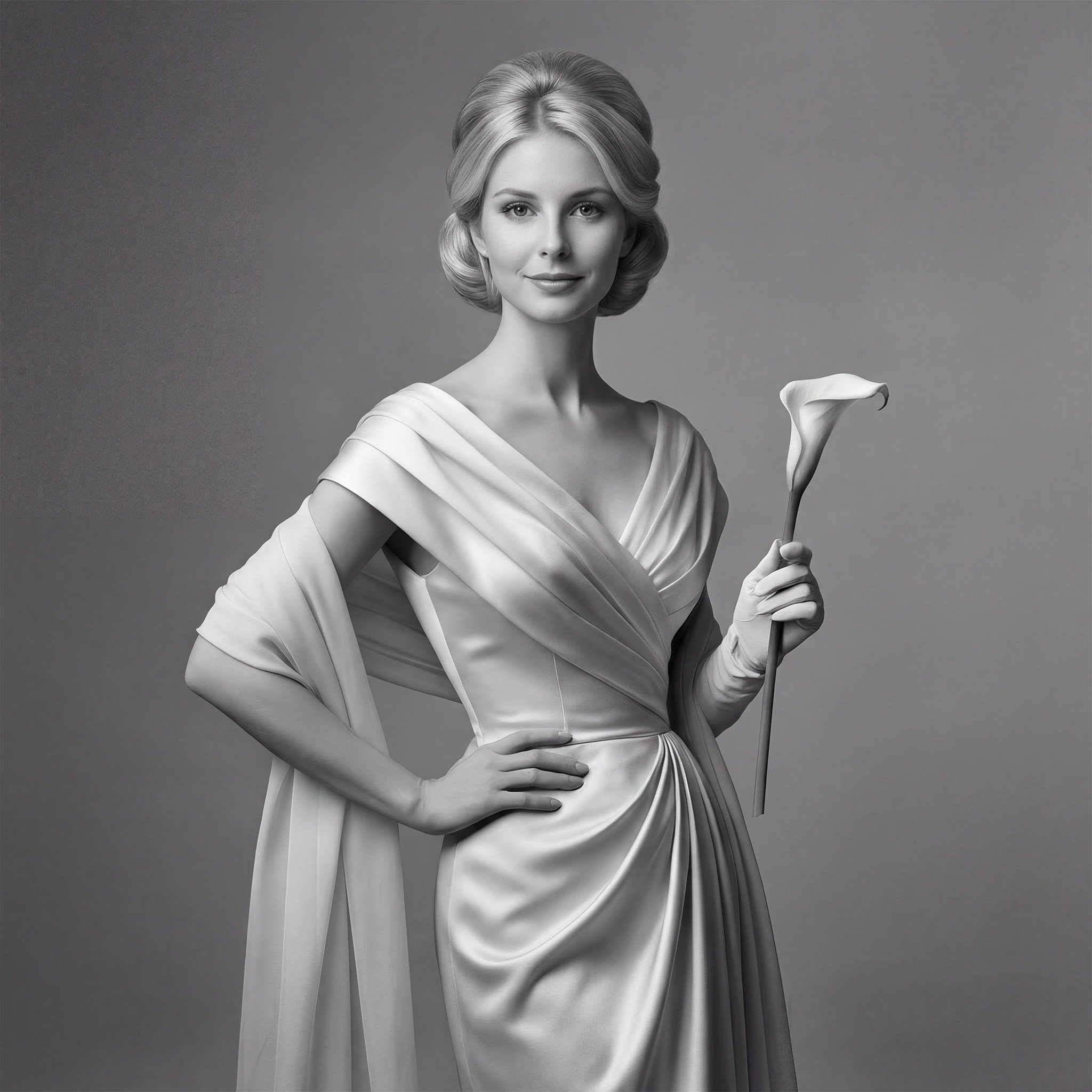
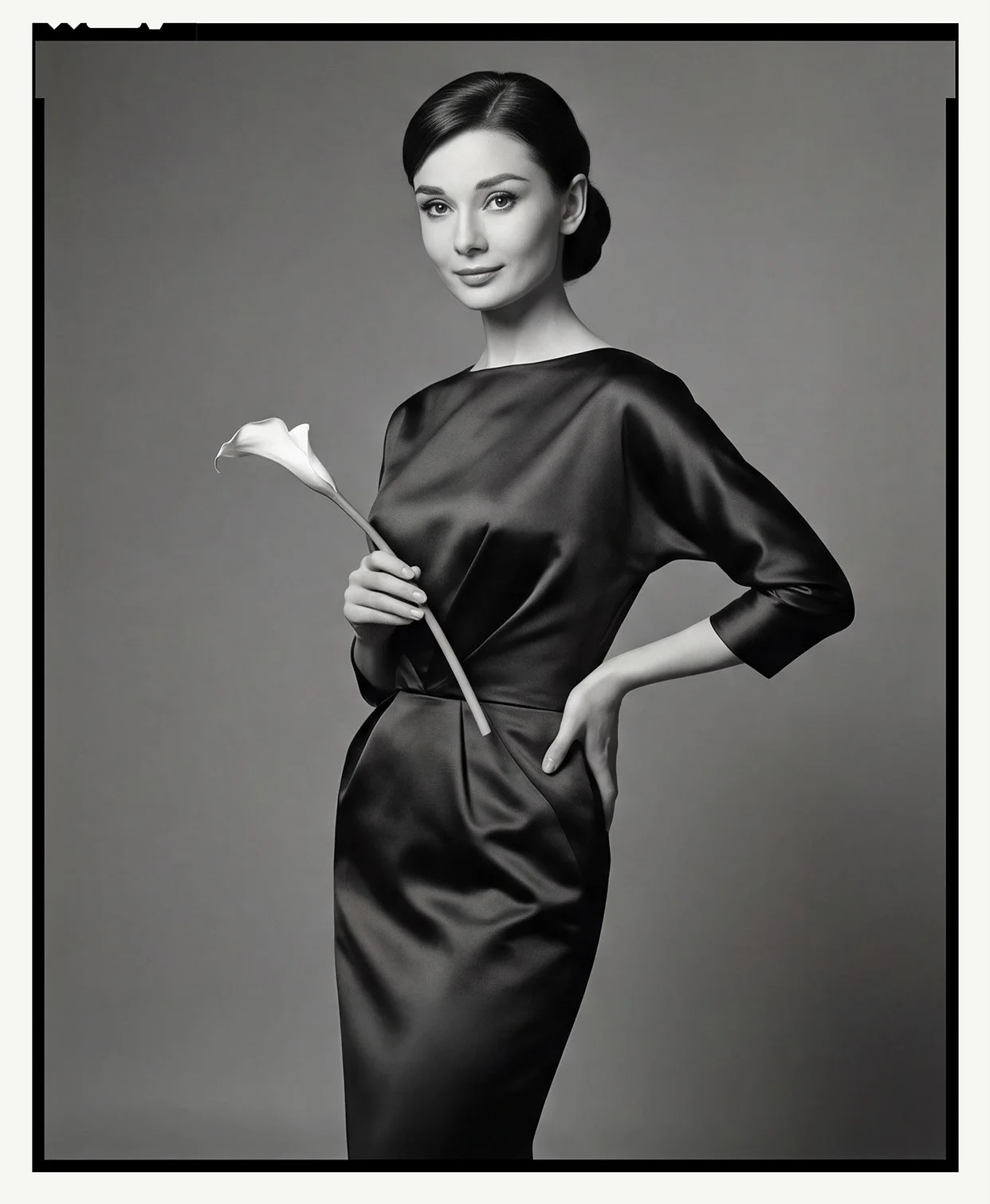
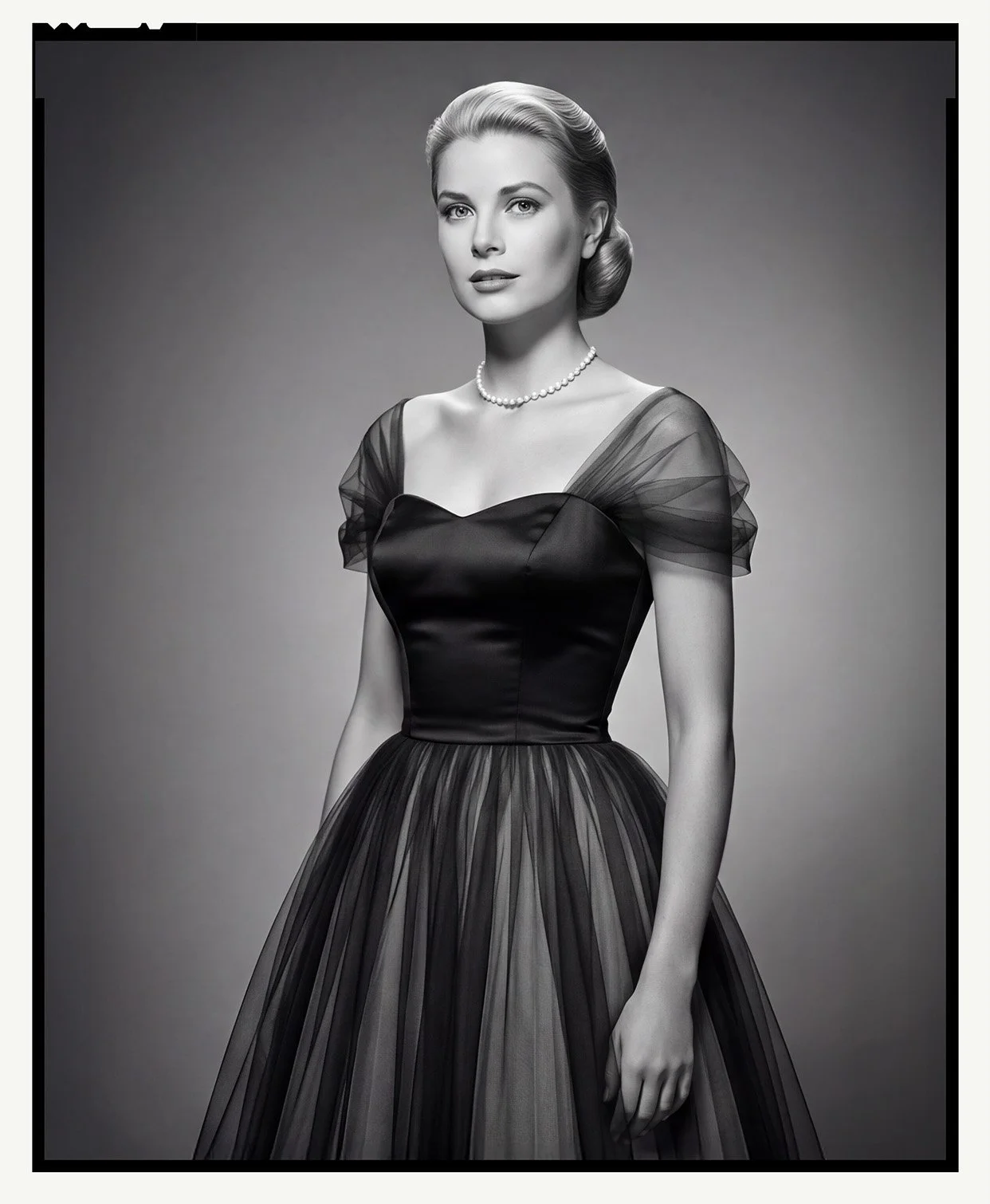
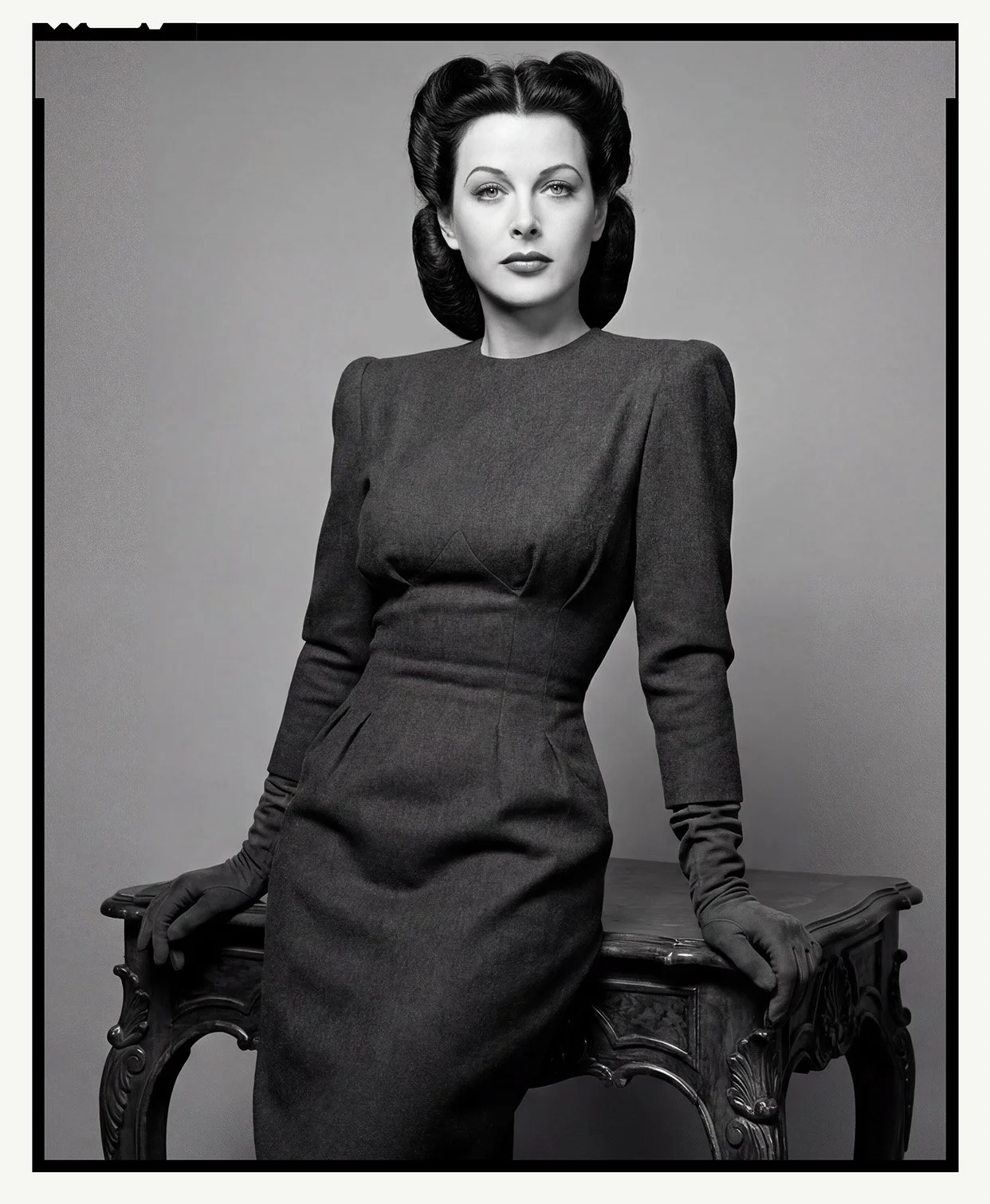
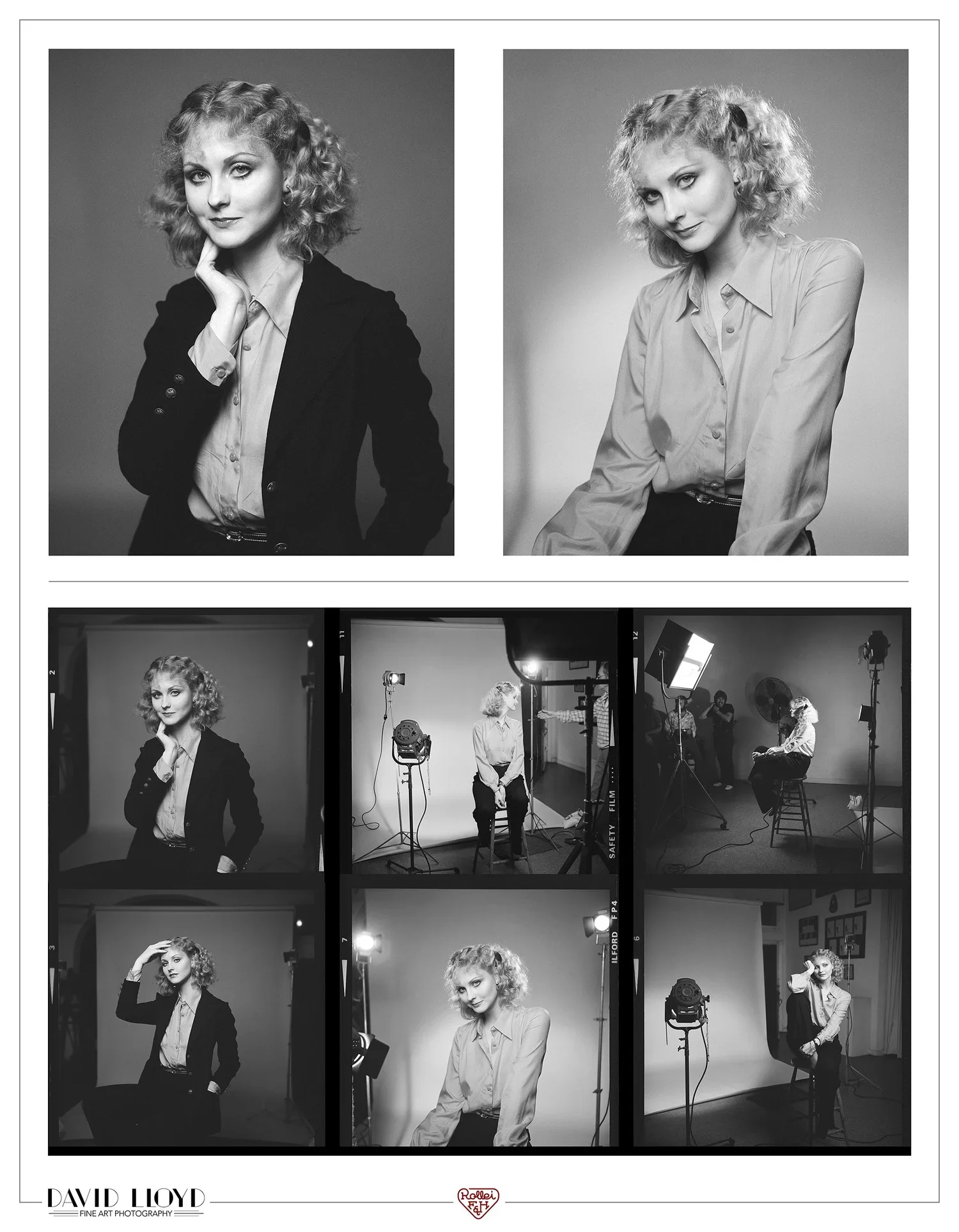
Perhaps my fascination and journey into old Hollywood began with the lighting workshop I created for the Vivitar Engineers in 1976/ As a young and relatively inexperienced photographer and engineer, my position at Vivitar offered me the opportunity to visit Tommy Mitchell’s fashion studio in Hollywood, CA. Tommy created the set with hot lights, background and models. From this experience, as well as my work at NBC in Burbank, CA. as a lighting gaffer, in 1968, along with my electronic flash design tasks at Vivitar in the mid-seventies, shaped a direction, leading to teaching photography, conducting lighting workshops and the writing and publishing of my Coffee Table book, “Creative OCF Lighting Techniques for Photographers”, 40 years later in 2016.
The Thread of Curiosity…
Ultimately an intense curiosity, instilled by a Cal-Tech Engineer, Doug Cally, led me to a career of photography and engineering. It led me to design photographic products, develop imaging systems, work on aerospace and space-related programs, teach students, write books, conduct workshops, and build a professional career around visual communication. Along the way, I was privileged to witness some of the most remarkable technological transformations in human history.
I have watched the world move from vacuum tubes to transistors, from discrete components to integrated circuits, from film to digital imaging, from room-sized computers to devices carried in our pockets. Today, we stand at the threshold of another profound transition as artificial intelligence begins to reshape how we create, communicate, and visualize ideas.
What fascinates me is that while the tools have changed dramatically, the human impulse behind them has remained remarkably constant.
We still seek to tell stories.
We still seek to preserve memories.
We still seek to understand our world and share our experiences with others.
Photography has always been one expression of that impulse. A photograph can document history, preserve a family memory, reveal beauty, communicate emotion, or inspire imagination. In many ways, the role of photography has never been solely about recording what existed in front of the lens. It has always been about helping us see, remember, and understand, through the eyes and imagination of the photographer.
For those of you who are professional photographers, I understand the dedication required to master the craft. The education. The self-assignments. The long hours of experimentation. The failures and successes. The countless lessons learned through experience. Every generation of photographers has adapted to new technologies while striving to preserve the artistic vision that gives photography meaning.
Today, Artificial intelligence presents another chapter and set of emotional and ethical crossroads…
Some will embrace it enthusiastically. Others will approach it cautiously. Some may reject it altogether. All of these responses are understandable.
For my part, I have chosen to explore and examine an ethical and creative approach of inclusion; a renewed memory, a dreamed of vision, a celebration of family, through an imagined illustration, a view of personal and historical moments reimagined and brought to life.
Partly because I have always been a technology enthusiast. Partly because I remain, at heart, an incurable image-maker. But mostly because curiosity has served me well throughout a personal journey of learning.
The purpose of this article is not to persuade you to accept or reject artificial intelligence. Rather, it is an invitation to examine it thoughtfully through the lens of history, creativity, and personal experience. Like the printing press, the camera, the transistor, the computer, and the Internet before it, AI represents another chapter in humanity’s ongoing relationship with technology. Where that chapter ultimately leads remains to be written.
For now, I invite you simply to explore the possibilities, reflect upon the questions, and consider your own place within this unfolding story.
David Lloyd, CPP, PPA Photographic Craftsman & Master of Photography