
The first three segments of Hollywood to Vogue explored how generations of photographers, filmmakers, designers, and portrait artists learned to use light to shape the face, define the silhouette, reveal the garment, and create character.
Now it is time to bring those lessons back into our own studios.
The equipment has changed enormously. Fresnels have been joined by electronic flash, LEDs, beauty dishes, softboxes, umbrellas, scrims, grids, reflectors, and modifiers of almost every imaginable size and shape. Yet the essential questions remain remarkably similar: Where should the light be placed? What does the light see? What does the camera see? And how do we control the relationship between highlight and shadow?
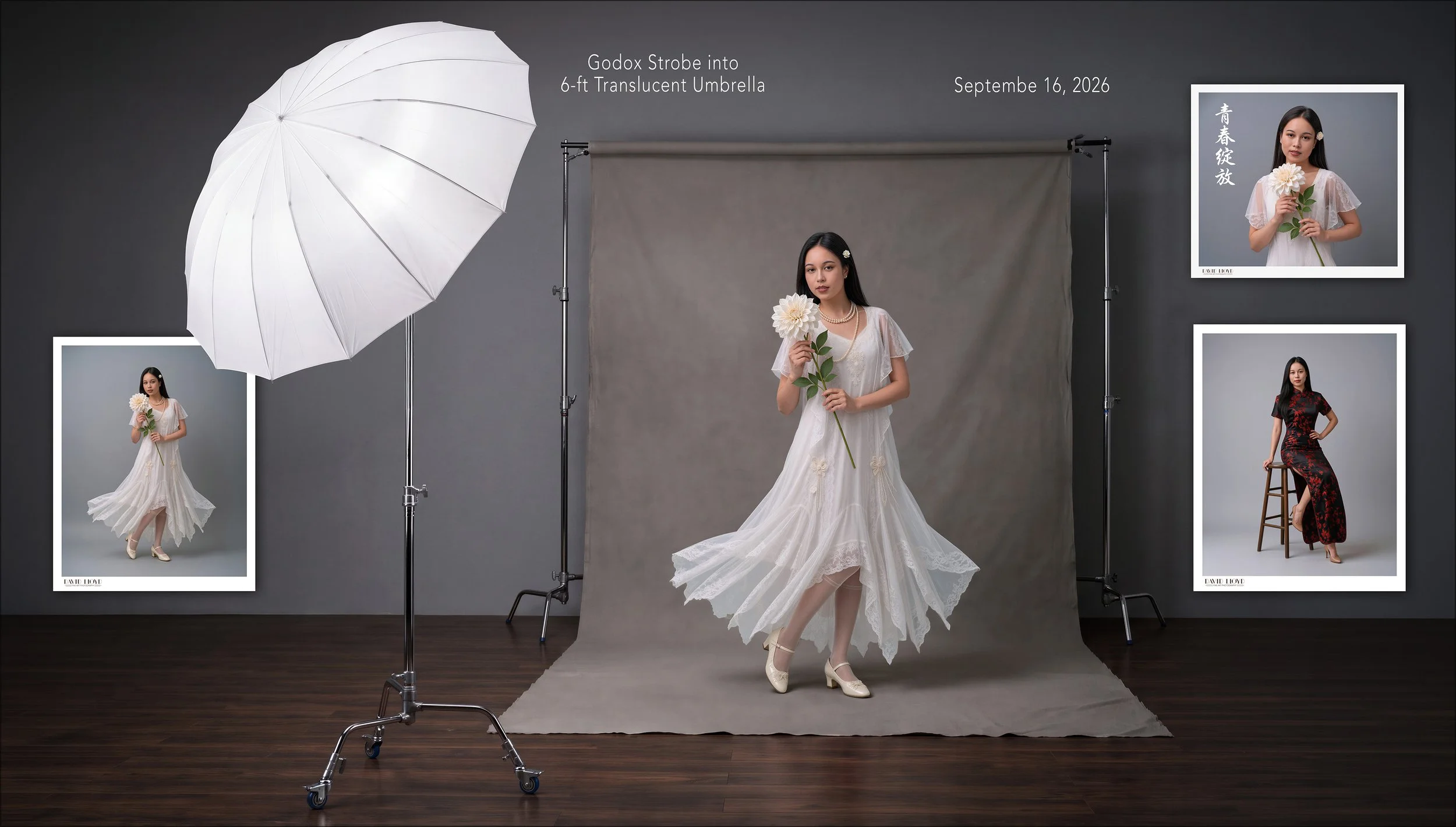
In this final segment, we move from historical observation to practical application. We will begin by examining a repeatable way to establish short-lit Rembrandt lighting, using the geometry of the subject’s own face rather than relying solely upon predetermined angles. We will then examine an actual contemporary portrait lighting setup and consider why each light was placed where it was.
From there, we will explore the idea of “Walking the Light”—using a large source not simply as a fixed light, but as a field through which the subject can move, changing wrap, direction, contrast, and falloff. We will also look at ways photographers can create effective DIY light modifiers, reminding ourselves that sophisticated lighting has always depended more upon understanding light than upon owning expensive equipment.